
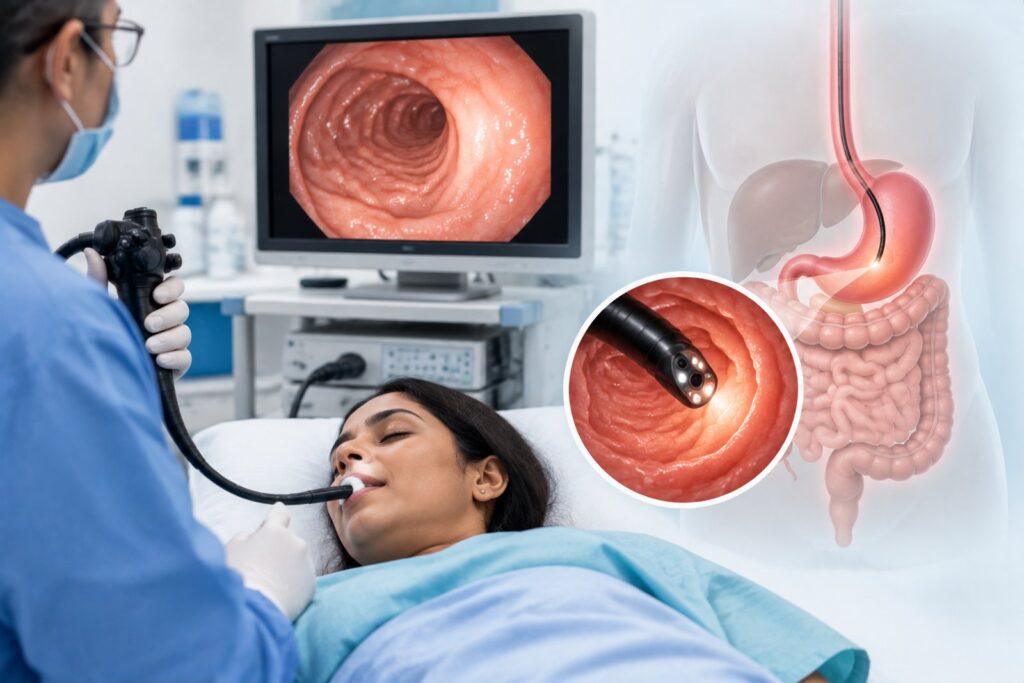
What Is Endoscopy?
Endoscopy is a medical test that helps doctors look inside your digestive system. With this tool, doctors can see your food pipe, stomach, and intestines. For many people, endoscopy is the best way to find out what is causing stomach pain or other digestive issues. Because it uses a small camera, endoscopy gives a clear view of the inside of your body. As a result, doctors can spot problems early and plan the right treatment.
Common Digestive Problems Diagnosed by Endoscopy
Doctors use endoscopy to check for many digestive health issues. For example, it helps find the cause of symptoms like heartburn or trouble swallowing. In addition, endoscopy can help diagnose:
Because endoscopy gives a close look, doctors can take small samples for lab tests if needed. This helps confirm the diagnosis and guide treatment.
How Endoscopy Works
During an endoscopy, a doctor uses a thin, flexible tube called an endoscope. This tube has a tiny camera and light at the tip. First, the doctor gently guides the endoscope through your mouth and down your throat. Then, the camera sends live pictures to a screen. As a result, the doctor can check for swelling, sores, or other problems. Sometimes, the doctor may use small tools through the endoscope to take samples or remove growths. Because the tube is flexible, it moves easily and causes little discomfort.
Symptoms That May Lead to an Endoscopy
Doctors may suggest endoscopy if you have certain symptoms. For example, you might need this test if you have:
Because these symptoms can signal a digestive problem, endoscopy helps find the cause quickly. Early diagnosis often leads to better results.
Preparing for an Endoscopy
Before your endoscopy, your doctor will give you clear instructions. Usually, you must stop eating and drinking for several hours before the test. This keeps your stomach empty and makes it easier for the doctor to see inside. Sometimes, you may need to stop certain medicines for a short time. For your safety, always follow your doctor’s advice. If you have questions, ask your care team before the day of the procedure.
What to Expect During the Procedure
On the day of your endoscopy, you will arrive at a clinic or hospital. First, a nurse may give you medicine to help you relax. Next, you will lie on your side. The doctor will gently place the endoscope in your mouth and guide it down. Because the tube is thin, most people feel only mild discomfort. The test usually takes less than 30 minutes. Afterward, you will rest until the medicine wears off. Most people can go home the same day.
Risks and Safety of Endoscopy
Endoscopy is safe for most people. However, as with any medical test, there are some risks. For example, you might have a sore throat or mild bloating after the test. Rarely, there can be bleeding or a small tear in the digestive tract. Because doctors are trained to perform endoscopy safely, serious problems are uncommon. The World Health Organization and other health groups say the benefits of endoscopy often outweigh the risks. Always tell your doctor about allergies or health conditions before your test.
Recovery and Aftercare
After endoscopy, you may feel sleepy until the medicine wears off. For a few hours, you might have a mild sore throat or feel gassy. However, most people return to normal activities by the next day. Your doctor will explain when you can eat and drink again. If you notice chest pain, trouble breathing, or heavy bleeding, call your doctor right away. Because aftercare is simple, most people recover quickly.
Prevention and Digestive Health Tips
While endoscopy helps diagnose problems, keeping your digestive system healthy is important. For better digestive health, try these tips:
Because early action can prevent many digestive issues, talk to Dr. Aashika Bhashyakarla if you have ongoing symptoms. Endoscopy remains a key tool for finding and treating digestive problems early.